Project
HydroVis
Description
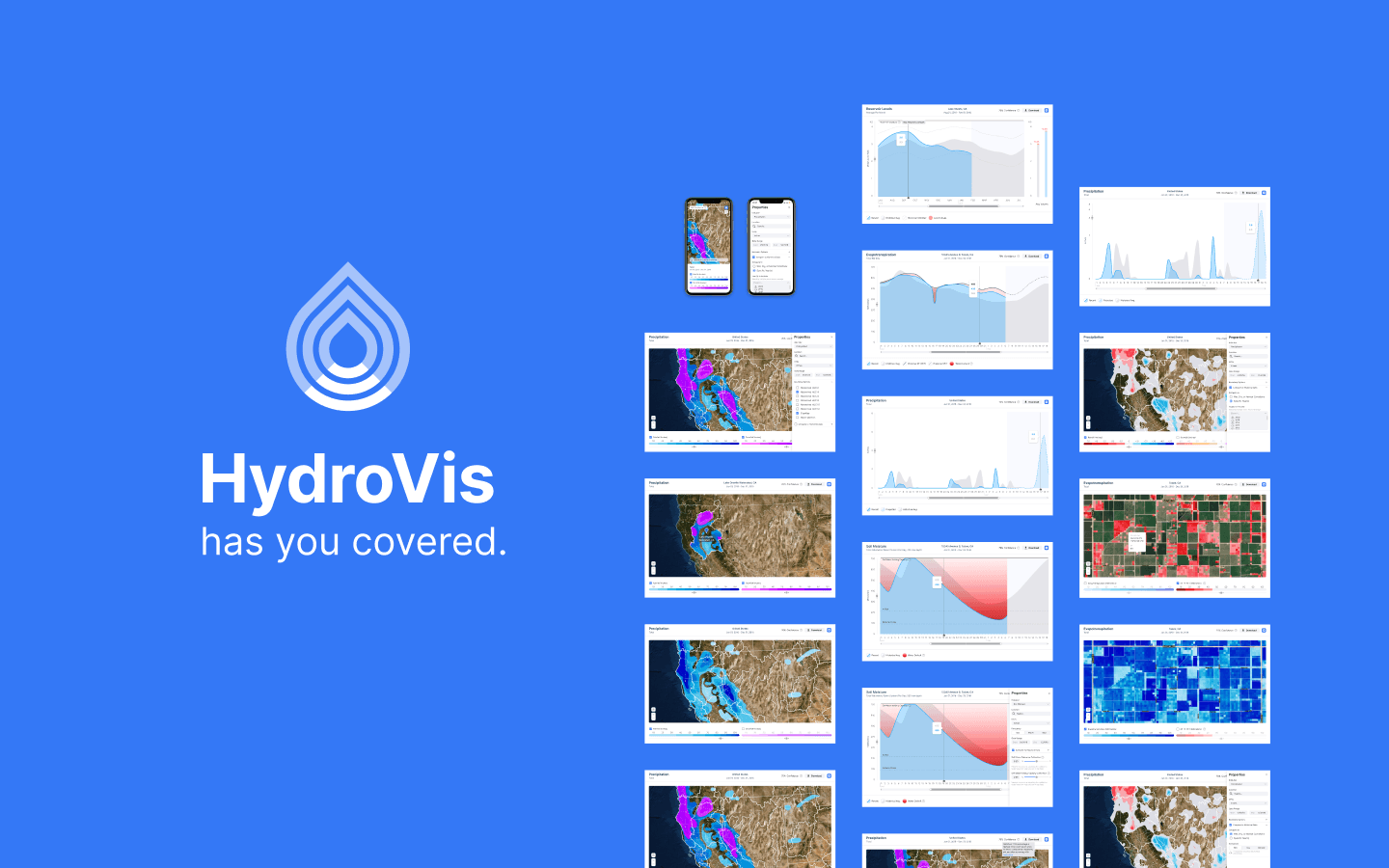
A new hydrological indicator system concept for growers and water managers that uses high-res data from NASA satellites.
Client
Year
Published
Services Rendered
UX Design
Industries
Aerospace
Earth-Science
Shasta Lake in June 2021 (right) compared to more typical conditions in July 2019 (left). The image on the right shows a significantly visible “bathtub ring” phenomenon — when areas that would normally be underwater when the reservoir is filled closer to capacity are exposed. Images from NASA Earth Observatory.
Project Overview
HydroVis is a central component of the National Climate Assessment (NCA) 2012-2022 Global Change Research Program. Our team’s ultimate goal was to help improve the water community’s decision-making process by designing a new indicator system using high-res data from NASA’s hydrological satellites. We worked to understand the needs and workflows that are being used across the nation to assess, communicate, and decide how to use one of our most valued resources, water.
My Role
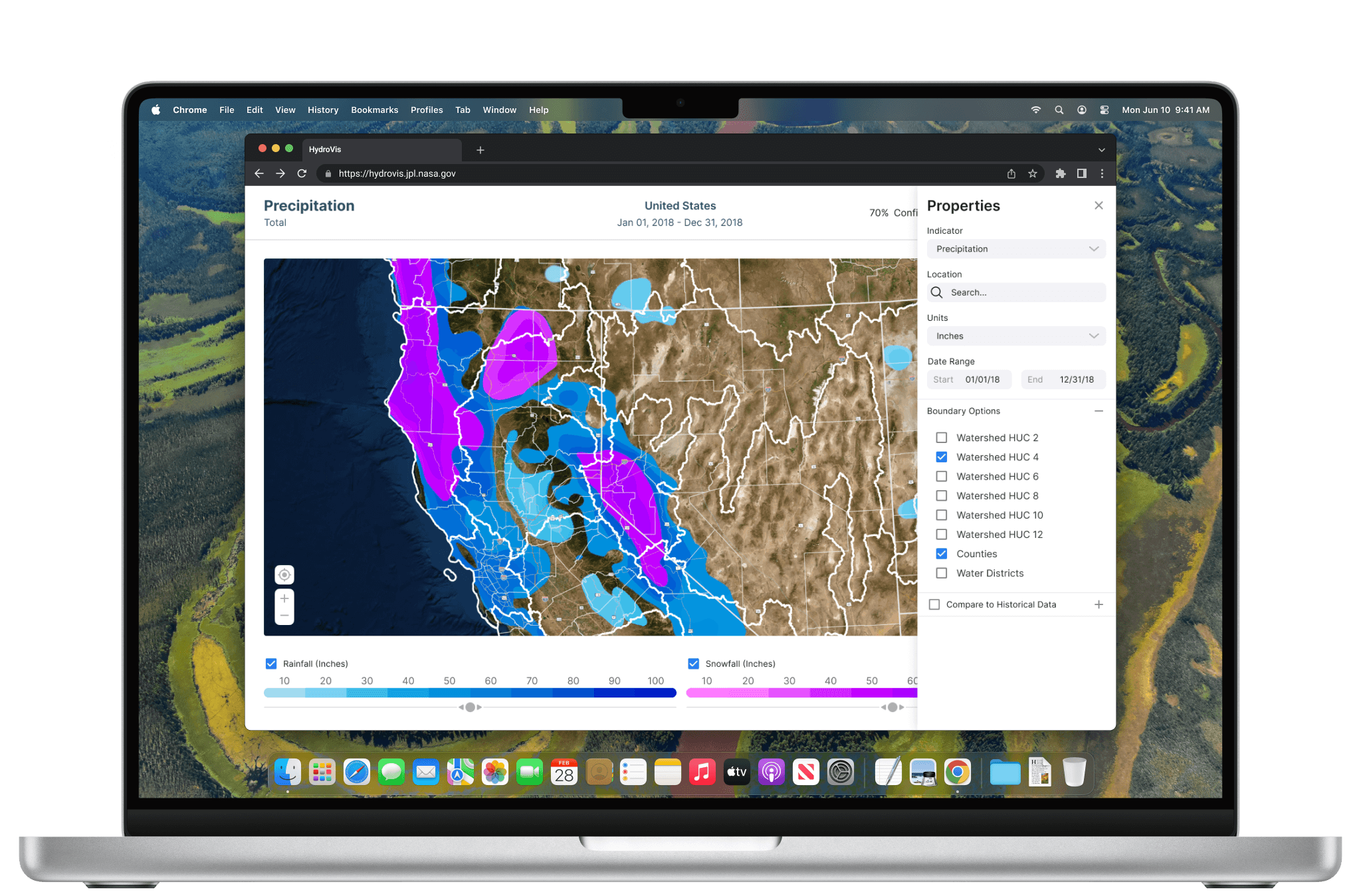
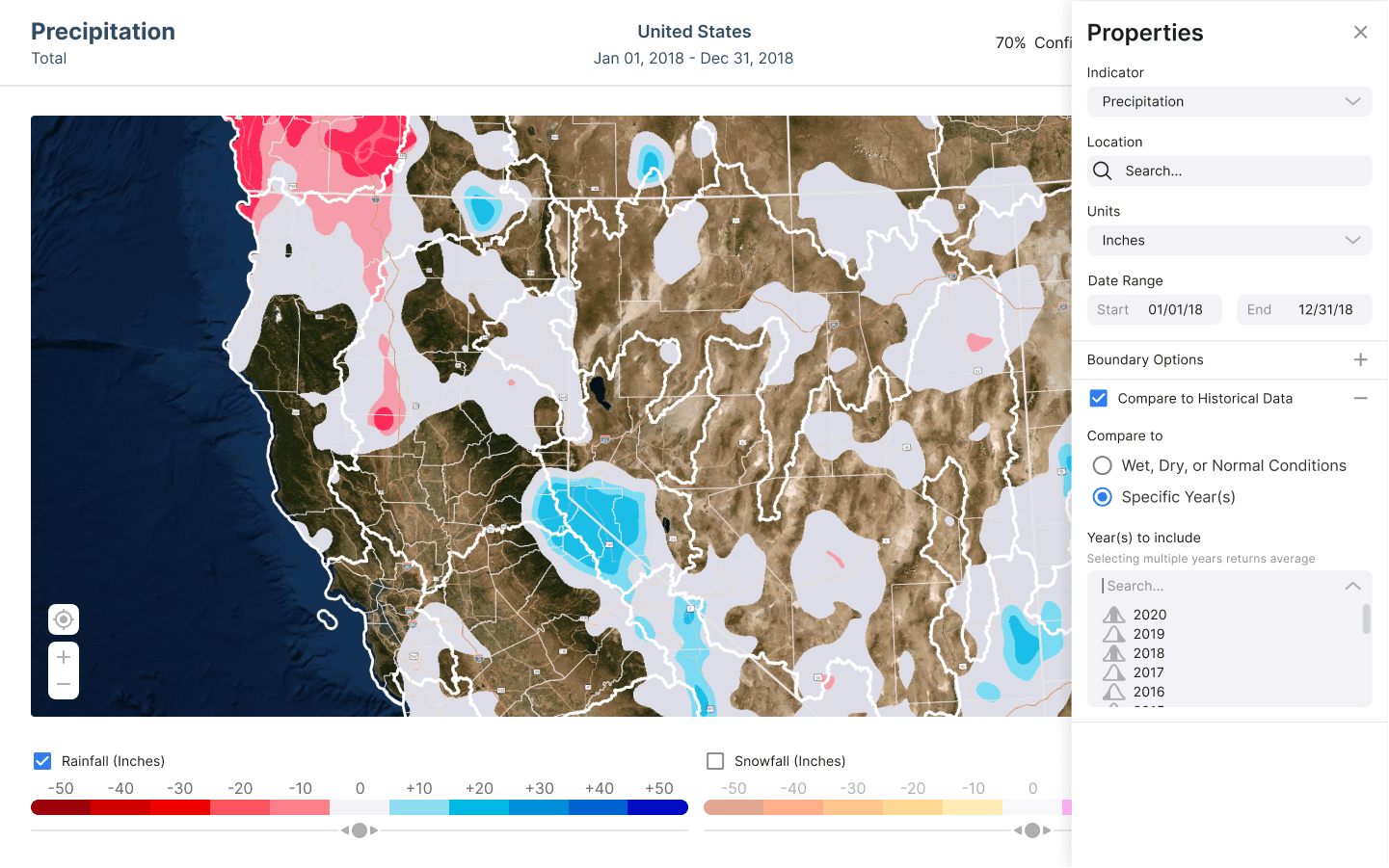
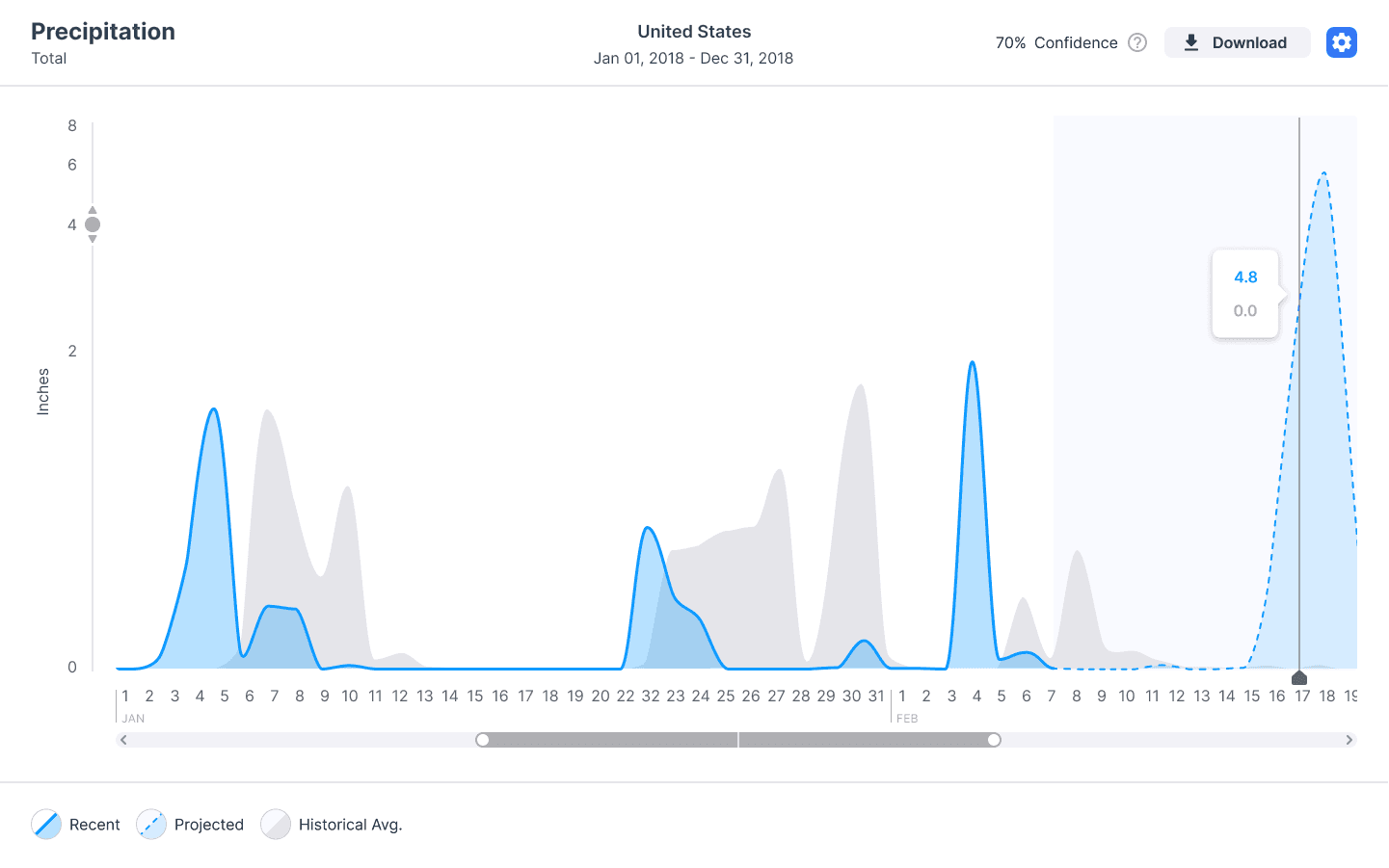
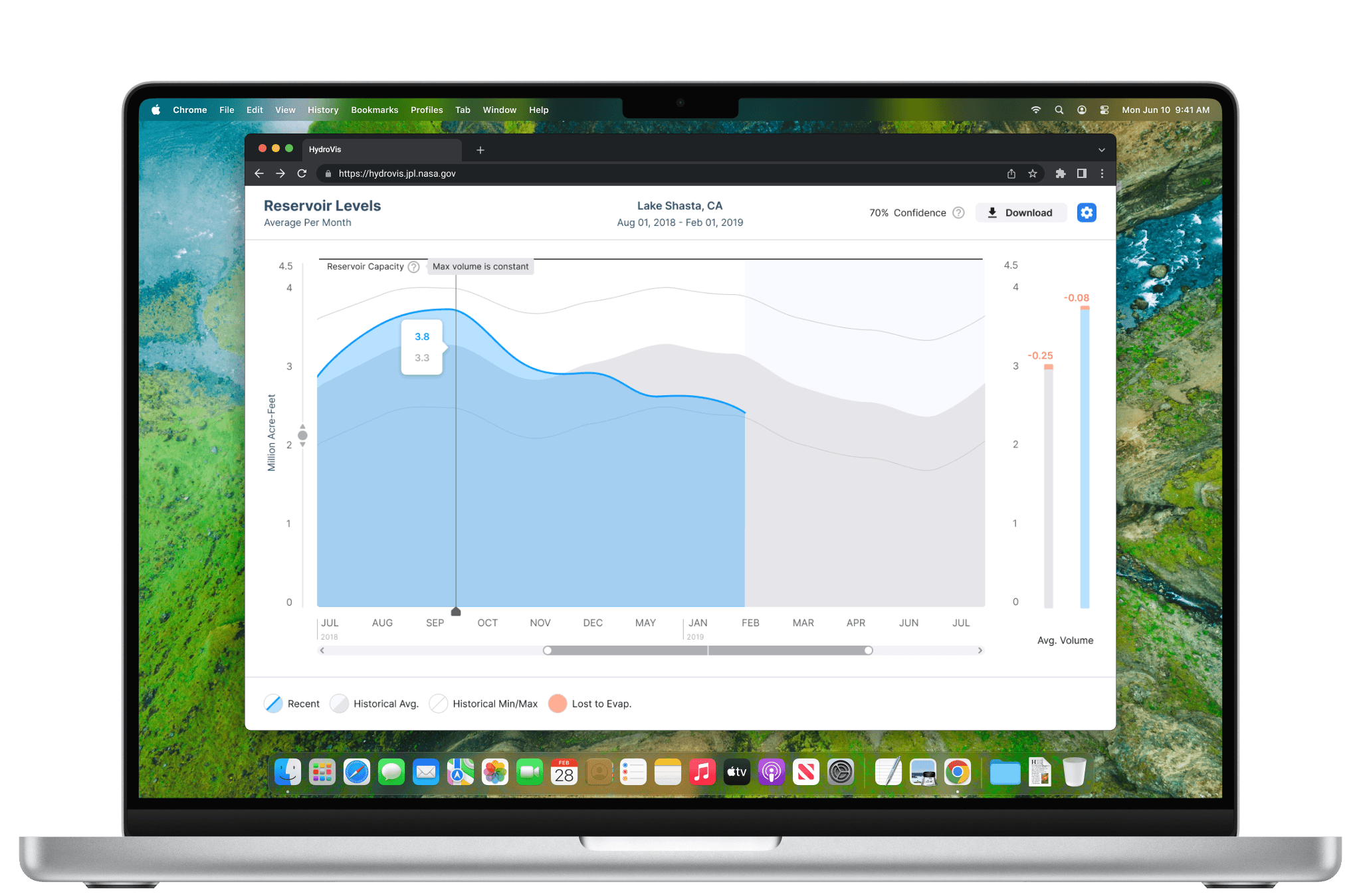
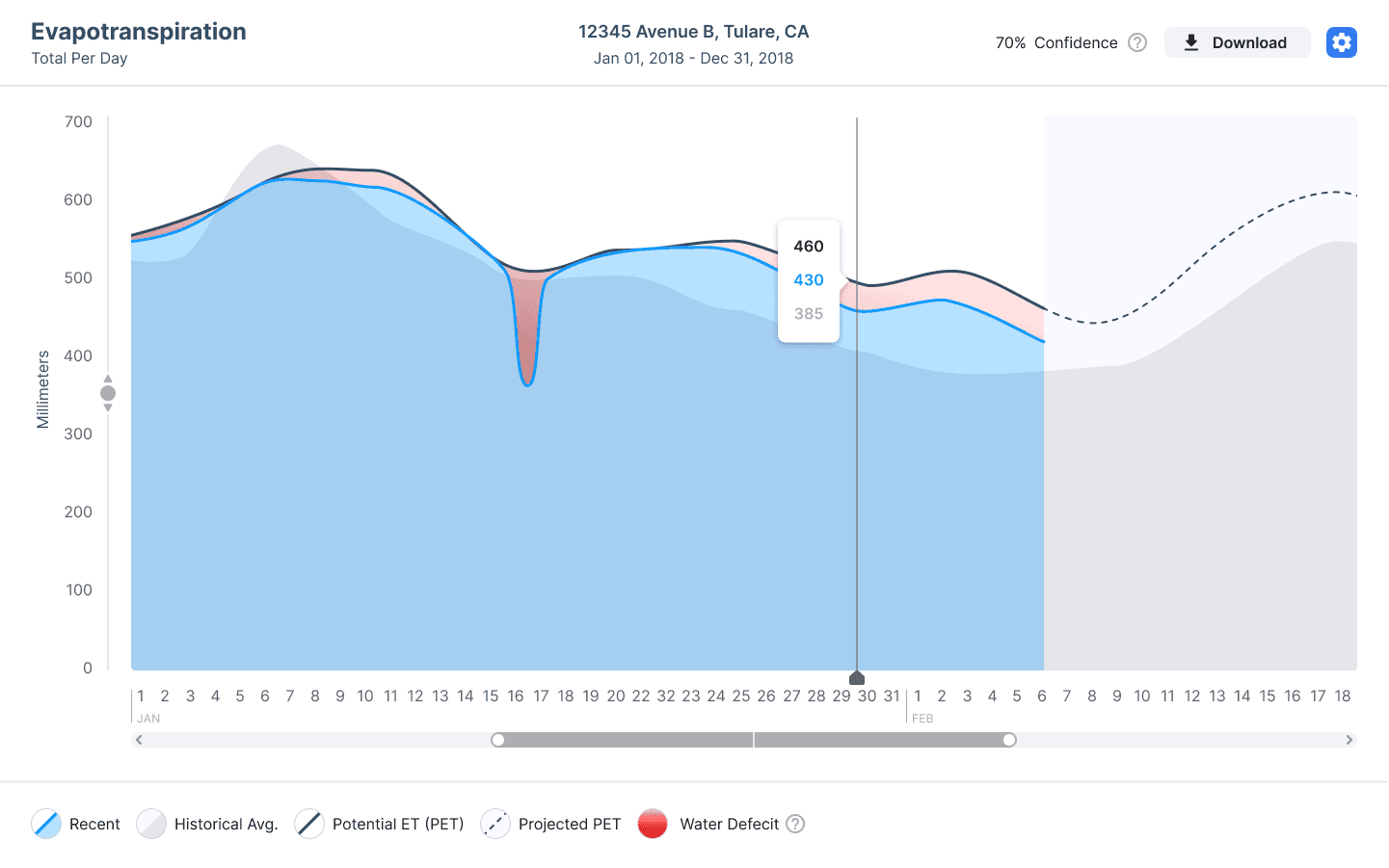
Led UI/UX design of innovative data visualizations for complex data sets such as precipitation, reservoir levels, evapotranspiration, and soil moisture.
Conducted generative, qualitative research and quantitative research to develop insights.
Contributed to a JPL white paper proposing the application of insights from HydroVis to similar data products.
The Challenge
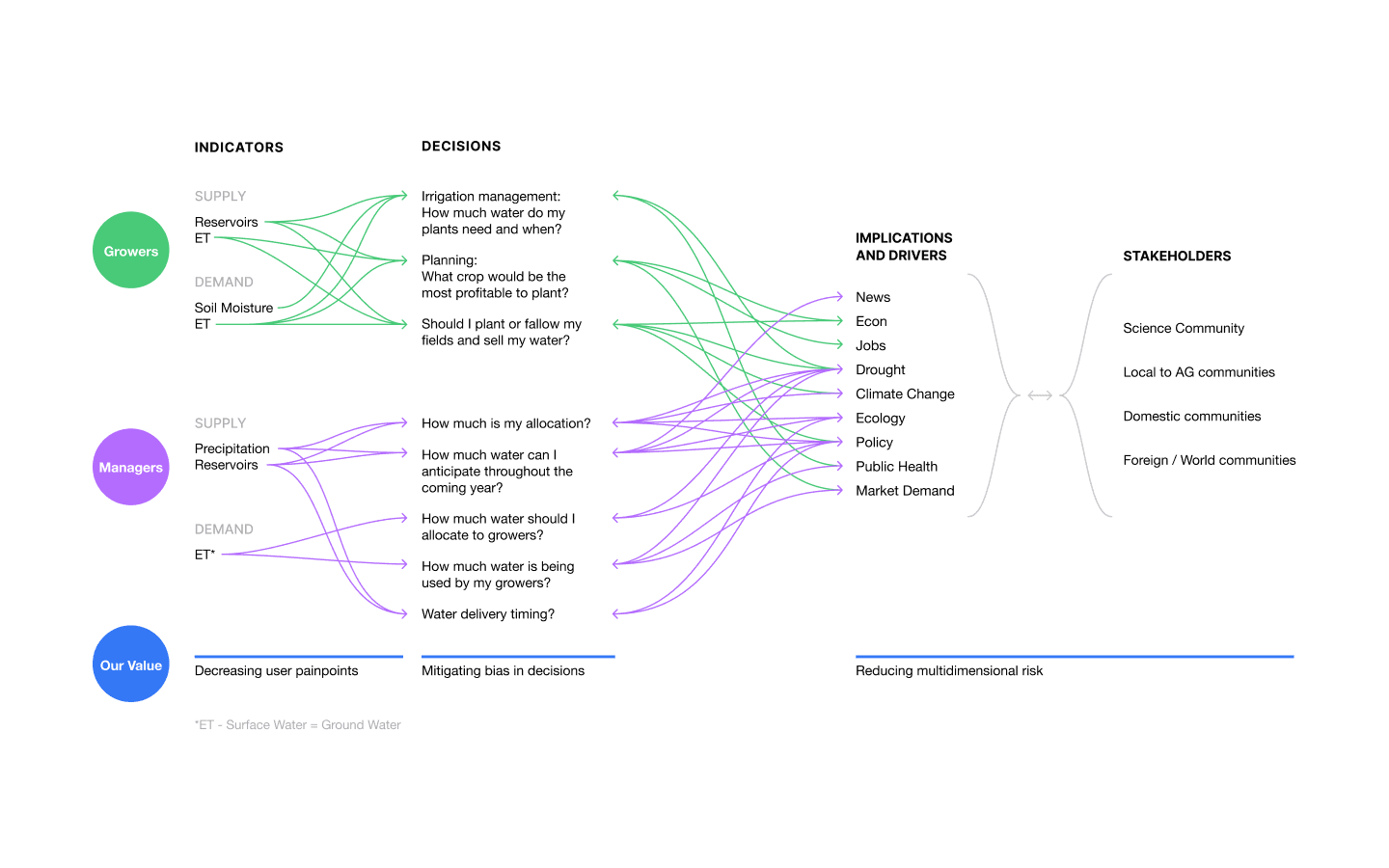
The water community is inundated with drought information products that are ill suited to their needs. Typically, these are produced by scientists with little input from end users. After completing extensive ethnographic research across user groups consisting of growers and water managers at the federal, state, and local levels for all 50 states, we discovered a complex landscape of pain-points and risks that the water community faced on a daily basis (read more about our research process in the methods paper, Designing Drought Indicators).
In this research, we noted a significant lack of trust in the data provided by the government and predictive models. We also identified that many of the current methods of gathering data were manual, labor intensive, and outdated. Additionally, users reported difficulty navigating the natural and political complexity across the various water systems, all of which have different laws and regulations for water and agriculture.
Our Solution
HydroVis mitigates bias in decisions, reducing multidimensional risk, by improving comprehension, increasing transparency, enabling control, and providing actionable data.
Comprehension
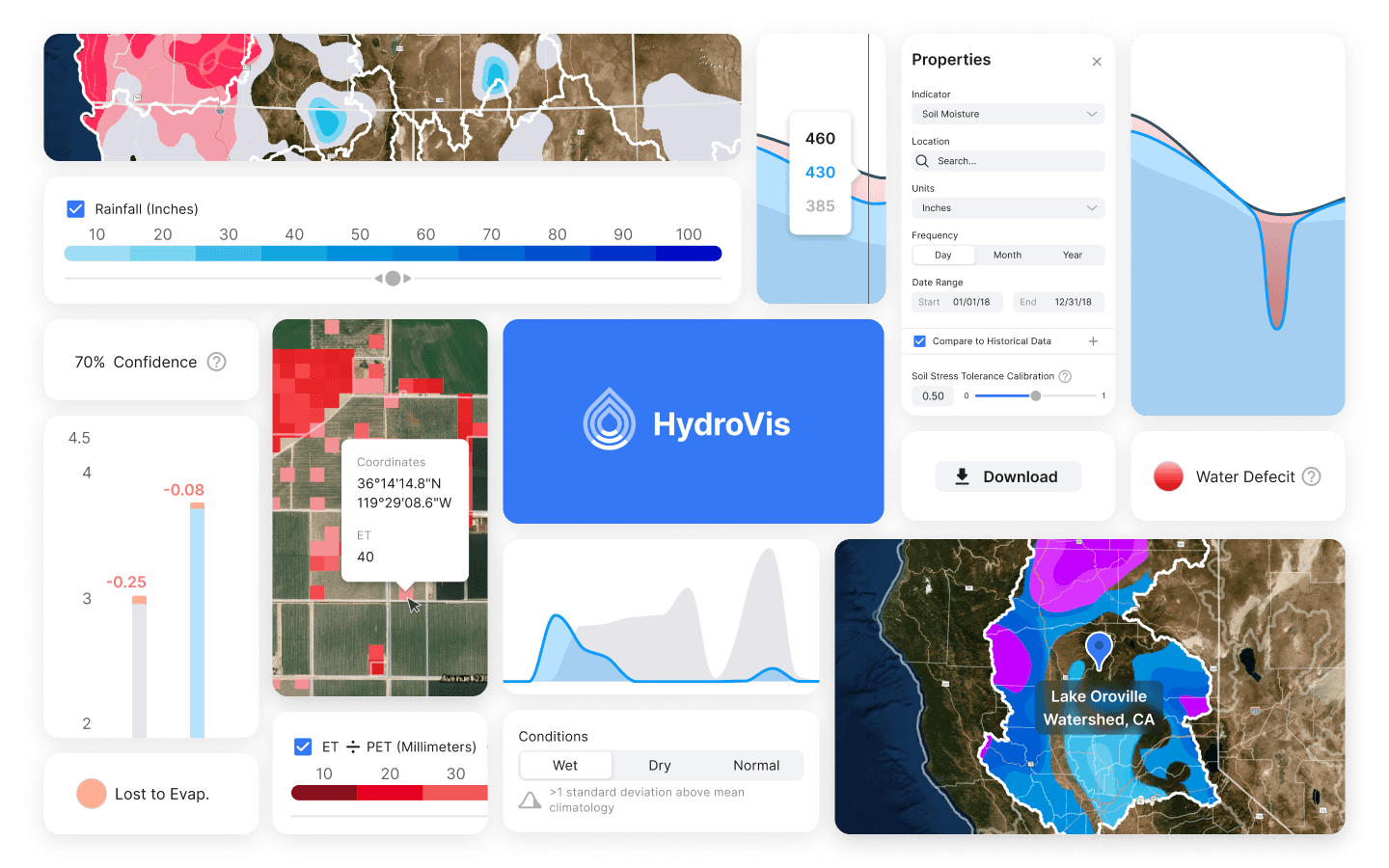
None of the other features matter if the viewer can’t understand what they’re looking at. HydroVis improves comprehension by improving visual communication with clear hierarchy and organized information architecture.
Transparency
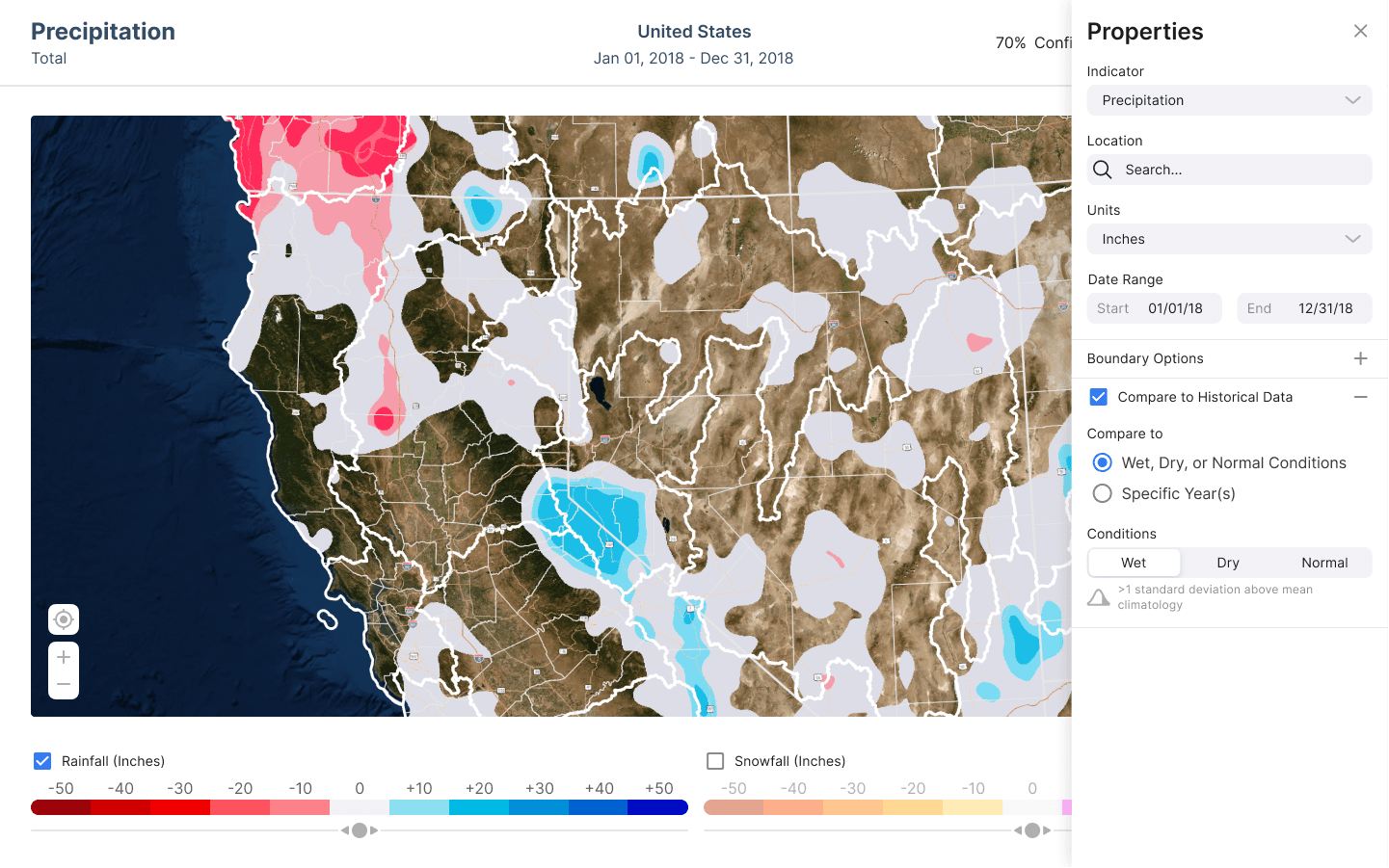
Increased transparency helps people make unbiased decisions and helps them appropriately assess how the data should influence their decisions. HydroVis accomplishes this with clear, easy to find statistical definitions and confidence intervals.
Control
Enabling control allows users to customize what they’re seeing on the screen and run their own statistics in combination with other datasets, such as socioeconomic analyses. We’ve made sure to include a plethora of necessary customizable data parameters, view adjustments, and a humble but mighty download button for when users need ultimate control of the data.
Actionable Data
Showing the severity of the hydrological impact is important so that users can assess risks and take action accordingly. HydroVis provides actionable data that can do things like help growers know exactly how much water their crop needs and highlight areas in the field where there’s inadequate irrigation or other risks to plant health.
HydroVis developed cohesive solutions that address root-cause problems, equipping growers and water managers with the tools to equitably distribute water to our communities, and to grow crops efficiently so they can continue to feed the country and the world.
The Result
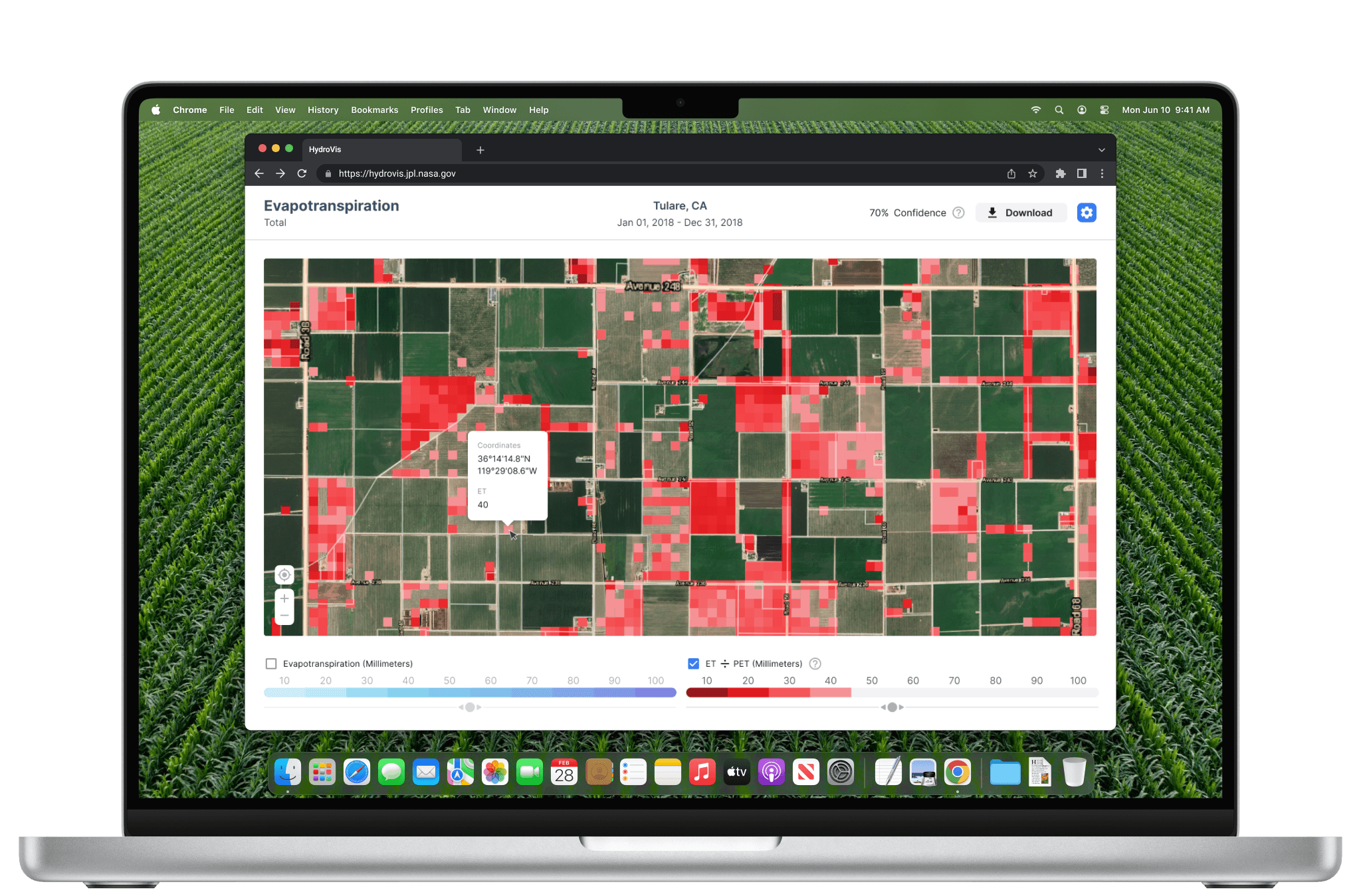
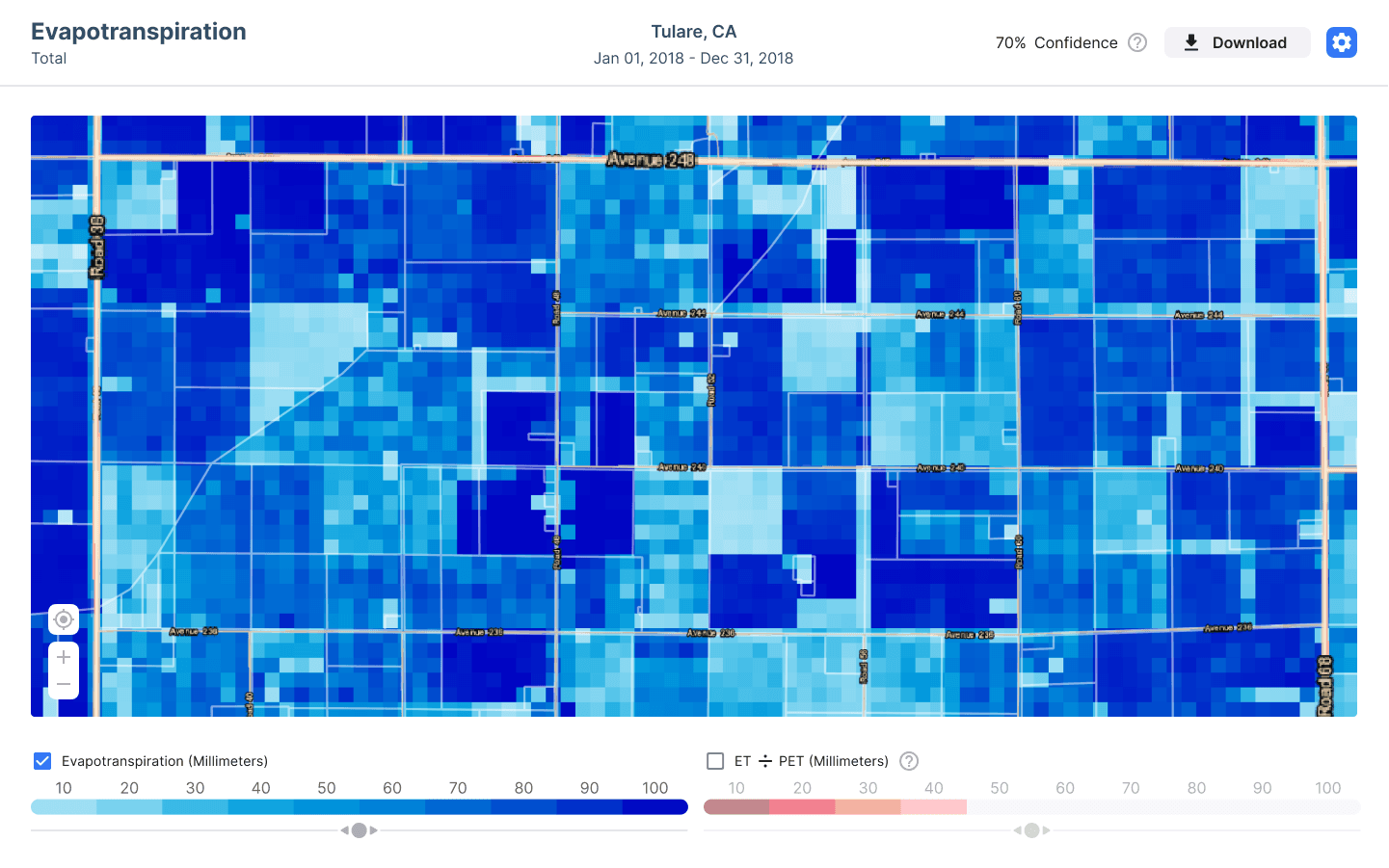
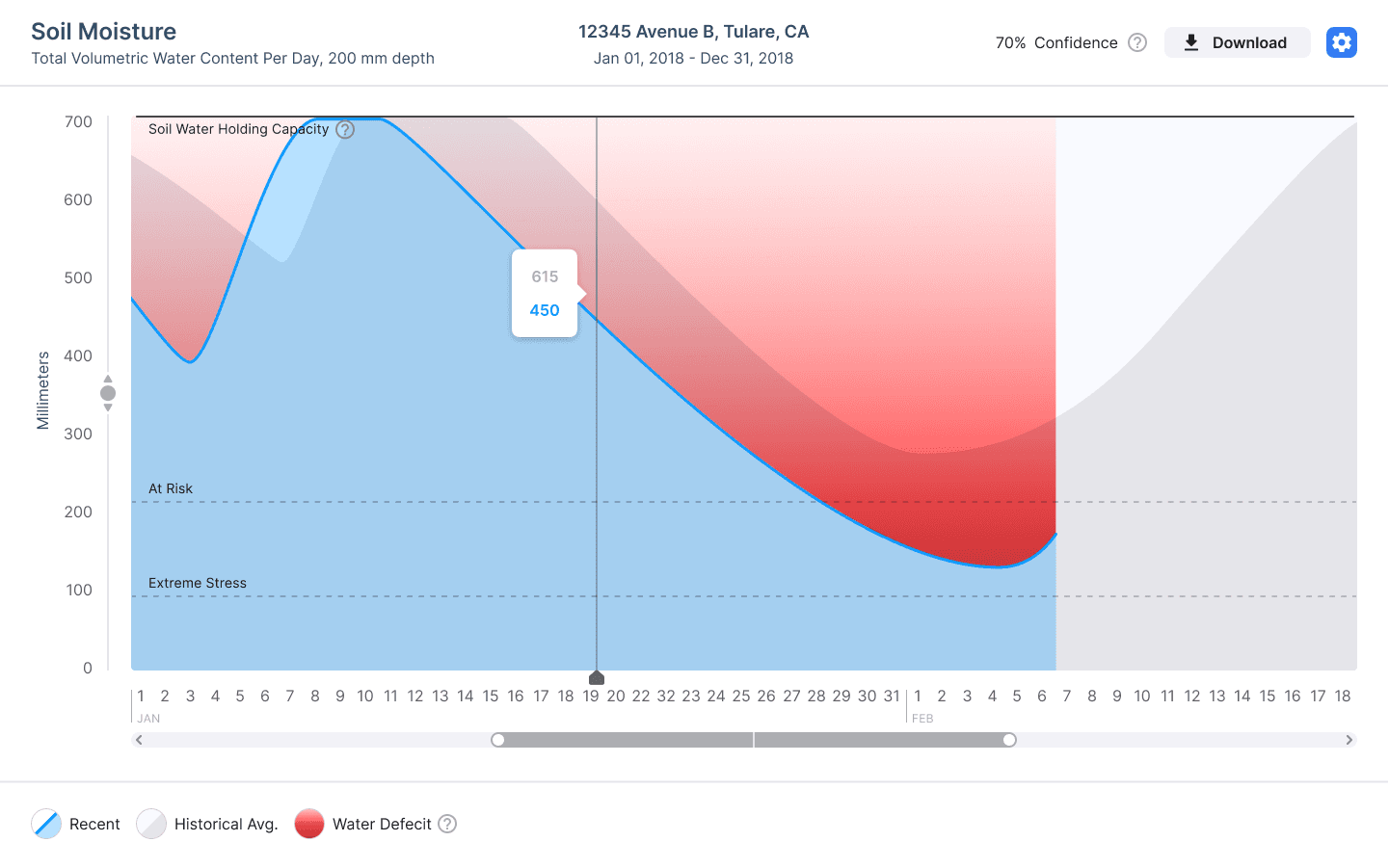
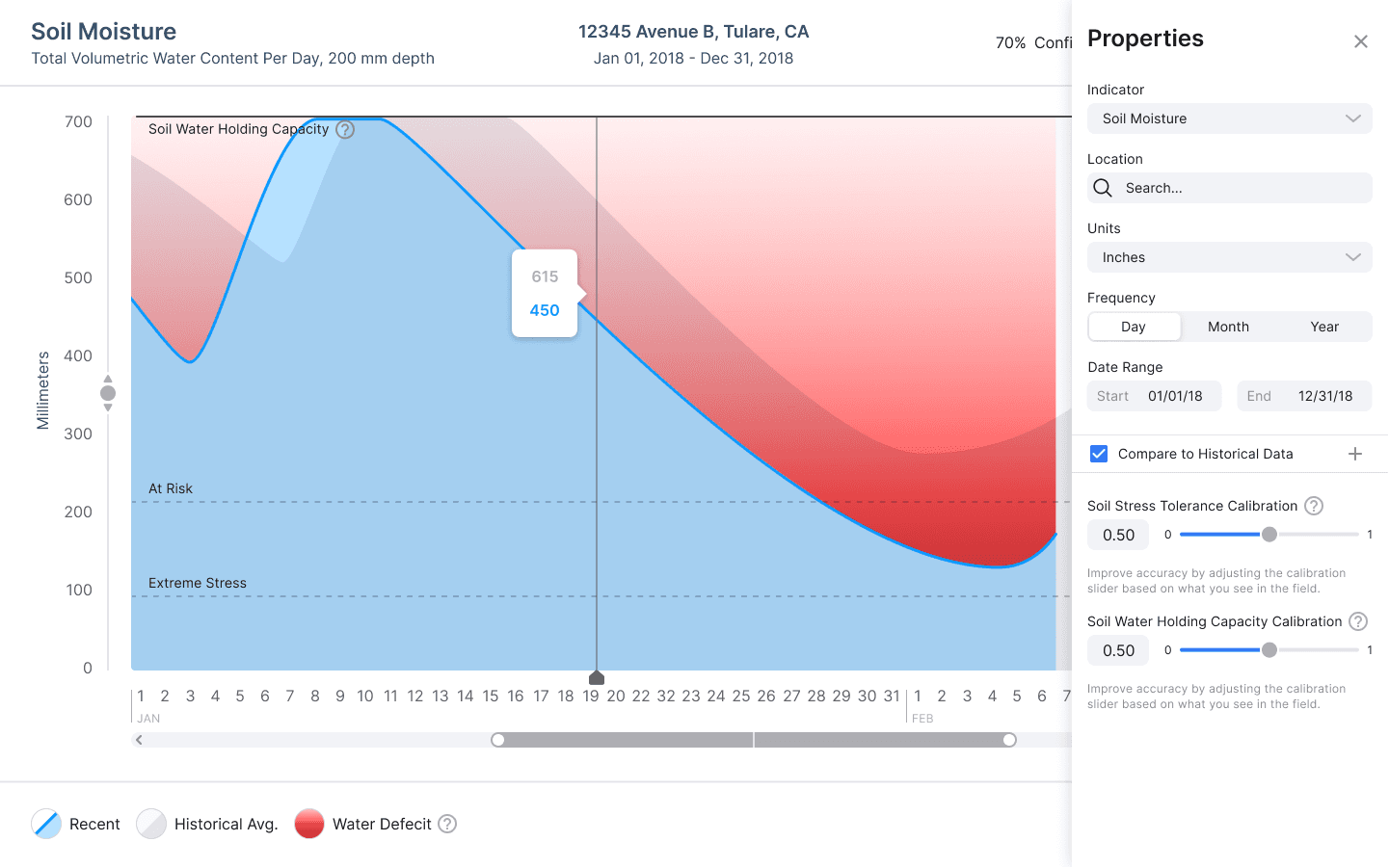

" height="198.09522990933007px" id="hHqXpi9ej" transform="translate(0 0.43)" width="199.99999782364316px"/></svg>)